INFRARED SPECTROMETERS
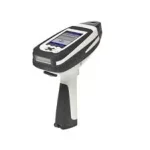
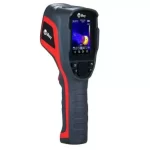
Infrared (IR) spectrometers for chemical testing are analytical instruments used to measure the interaction of infrared light with matter to identify and analyze chemical compounds in a sample. IR spectroscopy is a powerful and widely used technique in chemistry, materials science, pharmaceuticals, and many other fields.
ATTRIBUTES
Working Principle
- Infrared Light Source: Typically, a source like a heated filament or a tungsten-halogen lamp emits a broad spectrum of IR radiation.
- Sample Compartment: The sample is placed in a compartment where it interacts with the IR radiation.
- Monochromator: Selects a specific wavelength of IR light from the broadband source.
- Sample Holder: A variety of sample holders are used, including liquid cells, gas cells, and solid sample holders.
- Detector: Measures the intensity of the transmitted or absorbed IR radiation.
- Data System: Collects, processes, and analyzes the data, generating an IR spectrum.
Components
- Chemical Fingerprinting: IR spectroscopy provides a unique fingerprint for each compound, allowing for the identification of unknown substances.
- Quantitative Analysis: IR spectroscopy can also be used for quantitative analysis, such as determining the concentration of a particular substance in a mixture.
- Non-destructive: IR spectroscopy is typically non-destructive, allowing for the analysis of samples without altering their chemical composition.
- High Sensitivity: Modern IR spectrometers can detect compounds in trace amounts.
- Versatility: IR spectroscopy can be used to analyze solids, liquids, and gases.
Maintenance
- Routine cleaning and maintenance of the sample compartment and optical components.
- Calibration using standard reference materials to ensure accurate spectra.
- Regular performance checks and system validation to maintain instrument accuracy.
Key Features
- Chemical Fingerprinting: IR spectroscopy provides a unique fingerprint for each compound, allowing for the identification of unknown substances.
- Quantitative Analysis: IR spectroscopy can also be used for quantitative analysis, such as determining the concentration of a particular substance in a mixture.
- Non-destructive: IR spectroscopy is typically non-destructive, allowing for the analysis of samples without altering their chemical composition.
- High Sensitivity: Modern IR spectrometers can detect compounds in trace amounts.
- Versatility: IR spectroscopy can be used to analyze solids, liquids, and gases.
Applications
- Chemical Analysis: Identification of organic and inorganic compounds, functional groups, and structural analysis.
- Pharmaceuticals: Quality control, formulation analysis, and drug development.
- Materials Science: Characterization of polymers, coatings, and materials.
- Environmental Monitoring: Analysis of air and water pollutants.
- Food and Beverage Industry: Determination of food quality, composition, and authenticity.
- Forensic Science: Analysis of evidence, including drugs and explosives.
© 2022 All Rights Reserved.